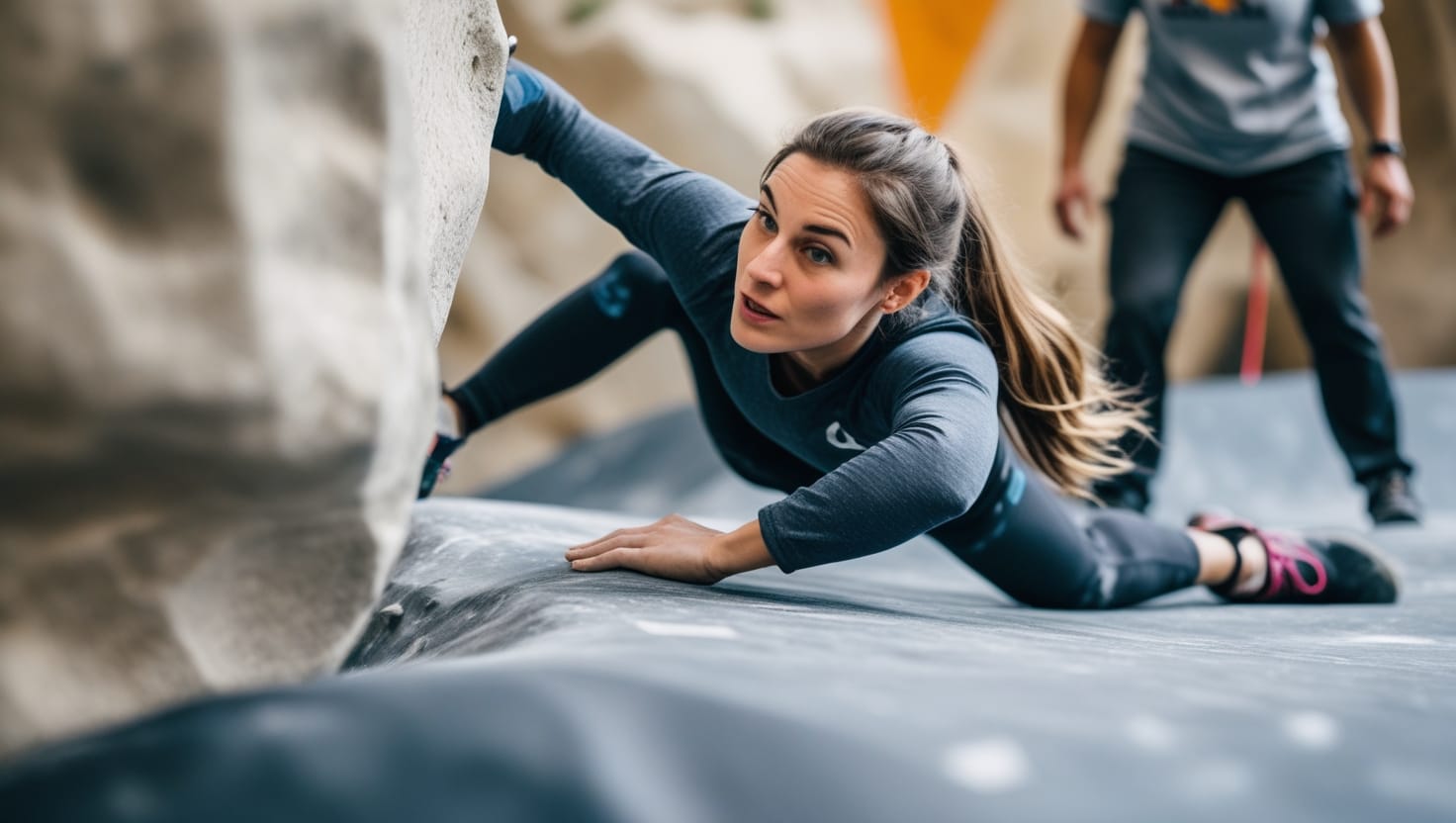
This article explores effective techniques in warming up for bouldering to enhance performance and reduce injury risk.
Bouldering can be tough, doesn’t matter if you’re just starting or you’ve been climbing for years; warming up matters. Think of it like this: cold muscles are grumpy muscles. A proper warm-up isn’t just stretching, though that’s part of it. It’s about waking up your whole body, getting your heart rate up maybe to around 110 bpm, and telling your muscles, “Hey, we’re doing some work now.”
Start with some light cardio (jumping jacks perhaps). Then get into dynamic stretches that mimic climbing movements, arm circles, leg swings. Specific climbing techniques, like easy traversing on the wall, can help too. Neglecting this prep work… well, that’s a recipe for pulled muscles and a frustrating session, believe me.
Ready to climb better? Keep reading to find out more about specific stretches and exercises.
Key Takeaway
- A good warm-up can prevent injuries and improve performance.
- Start with light cardio to get your heart rate up.
- Gradually increase climbing difficulty during warm-up climbs.
General Warm-Up
A body at rest is a body unprepared. The general warm-up, that first step, isn’t about pushing limits; its about nudging the body awake. Think of it as gently coaxing a sleepy engine to life.
Cardio is king (or queen) here, getting the blood moving, and the muscles pliable. The heart, it starts pumping. But what works best?
- Jumping Jacks: A classic for a reason; they work the whole body, easy to do almost anywhere.
- Jogging in Place: Five minutes might feel like a long time, but it’s a solid baseline.
- Light Cycling: Good if you’ve got access to a bike, a gentle way to warm up the legs.
- Jump Rope: Some people love it. Others, not so much, but it’s effective.
Five to ten minutes, that’s all it takes. The goal isn’t exhaustion; its preparation. Warming up before bouldering properly is the first key to a better, safer climb. Don’t skip it.
Dynamic Stretching
Stretching, after that initial cardio, is where you start to tell your muscles what’s coming. Dynamic stretching—movement while stretching—that’s the key. Forget holding those static stretches for minutes on end, this is about prepping for action.
The idea is simple, mimic the movements of climbing, but at a slower pace, with more control. That way, when your bouldering, you are all set.
- Arm Circles: Big circles, small circles, forwards, backwards, get those shoulders ready.
- Leg Swings: Front to back, side to side, loosen those hips. 15 seconds per leg is a good starting point.
- Shoulder Rotations: A simple movement, but it gets the blood flowing in a crucial area.
- Trunk Twists: Side to side, gently twisting the core.
Thirty seconds, more or less, for each of these. The goal is to feel looser, more fluid, ready to move. Neglecting stretching could mean a sudden tweak in a shoulder, a strained hip, and an afternoon wasted. [1]
Joint Mobilization
Joints. They’re the hinges and pivots of our climbing selves, and they often get overlooked in the rush to get on the wall. Taking a few minutes to mobilize them can make a big difference, in the short term and the long term. Healthy joints are happy joints; happy joints lead to better climbing.
So, what to do? The goal is simple: increase the range of motion, get the synovial fluid flowing, and prepare them for the stresses of climbing.
- Wrist Circles: Thirty seconds in each direction. A simple way to prep for gripping those holds.
- Ankle Rolls: Same deal, thirty seconds per ankle. Important for balance and foot placement.
- Shoulder Rotations: Again, focusing on moving through the full range.
- Hip Circles: Standing on one leg, making circles with the other. This can expose any tightness or imbalances. [2]
These exercises are preventative maintenance really. A little time spent here can save a lot of pain later.
Finger and Hand Preparation
Credits: Lattice Training
Fingers, the delicate instruments of climbing. They are often the first point of contact, the source of strength, and the most vulnerable to injury. A proper warm-up here isn’t about building strength, it’s about preparing the tendons and ligaments for the demands ahead.
Think of it as tuning an instrument before a performance. A few simple exercises can make all the difference between a successful climb and a painful tweak.
- Finger Glides: Sliding your fingers back and forth, that gentle movement helps keep things limber.
- Fist Clenching: Make a fist, then open your hand wide. Repeat this ten times, or more, until you feel the blood flowing.
- Light Hangboard Hangs: If you have access to one, short hangs (one second) can be beneficial. Just don’t overdo it; the goal is activation, not exhaustion.
These small gestures matter. Ignoring your fingers is like neglecting the foundation of a house. You might get away with it for a while, but eventually, something’s going to give.
Progressive Climbing Warm-Up
The wall, at last. After the cardio, the stretching, the joint mobilization, and the finger exercises, its time to put it all together. But rushing straight to the project? That’s a mistake. A proper warm-up on the wall itself is just as important as everything that came before.
The key is a gradual progression, starting with easy climbs and building up to more challenging ones. Think of it as a dress rehearsal, a chance to fine-tune your movements and dial in your technique.
- Warm-Up Wall Traverses: Start on the easiest wall you can find. Focus on footwork, balance, and smooth movement.
- Climb V0 Problems: Time to focus on technique and body positioning, what you have practiced for.
- Move to V1 and V2: Introduce different hold types—slopers, crimps, pinches—to adapt to various climbing situations.
- Climb V3 Problems: At this point, you can start adding some power, but don’t forget to maintain focus on technique.
This isn’t just about warming up your muscles; it’s about warming up your mind. It’s about getting into the flow, finding your rhythm, and preparing yourself for the challenges ahead.
Mental Preparation
The mind, the often-overlooked muscle of climbing. Physical preparation is crucial, of course, but without a focused and prepared mind, even the strongest body can falter. Warming up the mind is about setting intentions, visualizing success, and clearing away distractions.
It’s about entering a state of flow, where you’re fully present in the moment, attuned to the movements of your body and the challenges of the wall.
- Visualize Your Routes: Picture yourself climbing the routes you want to try. See yourself making the moves, sticking the holds, and reaching the top.
- Set Goals: What do you want to accomplish during this session? Do you want to send a particular problem? Work on a specific technique?
- Get Focused: Take a few deep breaths, close your eyes, and clear your mind of distractions. Focus on the task at hand.
Climbing is as much a mental game as it is a physical one. A little mental preparation can make a big difference in your performance.
Tailoring Your Warm-Up

Experience changes everything. It changes how we approach a climb, how we read a sequence, and yes, how we warm up. What works for a beginner won’t necessarily work for an advanced climber, and vice versa.
The key is to tailor your warm-up to your own level, your own body, and your own goals. There’s no one-size-fits-all solution here; it’s about finding what works best for you.
- Beginner Climbers: 20-30 minutes is often sufficient. Focus on the fundamentals—basic movements, footwork, and body positioning.
- Intermediate Climbers (V3-V5): A 30-minute routine is a good starting point. Incorporate more varied climbs and focus on refining technique.
- Advanced Climbers (V6+): A longer warm-up may be necessary. Include more problems at varying difficulties, paying close attention to your body’s signals.
Adjusting your warm up will ensure optimal time. Don’t just go through the motions; pay attention to how your body feels, and adjust accordingly.
Key Principles
Warming up isn’t a race, it’s a process. It’s about gradually preparing your body and mind for the demands of climbing. The key principles are simple: progression, avoiding fatigue, and consistency.
Think of it like building a fire, you start with small kindling and gradually add larger logs. Rushing the process will only lead to a sputtering flame that quickly dies out.
- Gradual Progression: Always start with easy climbs and slowly increase the difficulty. Don’t jump straight to your limit.
- Avoid Fatigue: The goal isn’t to tire yourself out; it’s to prepare yourself. If you’re feeling fatigued, you’re doing too much.
- Consistency: Make warming up a regular part of your climbing routine. It’s an investment in your climbing health.
Thirty to forty-five minutes may seem like a long time, but it’s a small price to pay for a safe and productive climbing session. Neglecting these principles is like skipping breakfast before a long day of work, you’ll quickly run out of steam.
Common Mistakes to Avoid
Even with good intentions, warming up can go wrong. It’s easy to fall into bad habits, to cut corners, or to simply not understand the principles involved. Avoiding these common pitfalls can make a big difference in your climbing performance and your overall health.
The most common mistakes are often the most tempting. Skipping the warm-up altogether, rushing through the motions, or relying on outdated techniques can all sabotage your session before it even begins.
- Skipping the Warm-Up: This is the biggest mistake of all. Jumping straight into climbing without any preparation is like starting a car in fifth gear.
- Static Stretching: Holding a stretch for a long time before climbing. They can actually decrease muscle power and increase the risk of injury. Save those for after your session.
- Rushing Through: Take your time, feel the movements, and listen to your body.
Warming up is an investment in your climbing health. By avoiding these mistakes, you’ll set yourself up for a safer, more enjoyable, and more productive session on the wall.
FAQ
How should I structure a complete bouldering warm-up routine?
Start with light cardio like jumping jacks to raise your heart rate. Follow with dynamic stretching – arm circles, wrist circles, ankle circles, and shoulder rotations get your joints ready. Add bodyweight squats and lunges for lower body activation.
Then do some finger stretches and tendon glides to prep your hands. Finish with on-the-wall warm-up climbs (V0/V1) or easy traversing on the wall. Gradually increase difficulty during warm-up climbs, and rest briefly between warm-up climbs to avoid flash pumps through proper warm-up.
What exercises help prepare my upper body for bouldering?
Push-ups activate your chest and shoulders while arm circles loosen your shoulder joints. Wrist circles and finger stretches prep your forearms and fingers for gripping. Shoulder rotations and elbow stretches improve mobility in key climbing joints.
Stretching forearms thoroughly and stretching wrists thoroughly prevents strain. For climbers with more experience, incorporating theraband exercises into warm-up can target shoulder stability. Stretching shoulders thoroughly helps prevent injuries during dynamic moves.
Which lower body exercises are essential before hitting the wall?
Bodyweight squats and lunges work major leg muscles. Forward-backward leg swings and side-to-side leg swings increase hip mobility. Ankle circles prep your feet for precise placements.
Glute activation drills and stretching hamstrings thoroughly improve power and flexibility. Deep squats stretch helps your hips prepare for high steps. Stretching calves thoroughly prevents cramping. Stretching legs thoroughly before climbing improves your overall range of motion for those tricky moves.
How can I warm up my fingers and prevent injuries?
Finger stretches and tendon glides are key for injury prevention. Wrist circles help mobilize the joints. Practice these gently before climbing. When you’re ready for the wall, start with easy traversing on the wall using jugs.
Climbing easy grades to warm up fingers and forearms allows tendons to gradually adjust to strain. Always avoid crimping hard when cold. Performing mobility-focused drills to improve range of motion in your hands helps prepare for various grip types.
What’s the best way to transition from warm-up to harder climbing?
After your off-wall exercises, start with on-the-wall warm-up climbs (V0/V1). Try easy traversing on the wall to get comfortable with movement. Then follow a pyramid climbing routine – start easy, build up, then return to easier climbs.
Climbing progressively harder routes (V4-V5) should come only after thorough warming up. Practicing technique on easier grades before projects improves performance and prevents injury. Climbing pyramid sequence (progressively harder grades) is an effective approach many experienced climbers use.
How long should my bouldering warm-up take?
A complete warm-up typically needs 15-30 minutes. Start with 5 minutes of cardio like jumping jacks to get your blood flowing and increasing heart rate through dynamic movements. Spend another 5-10 minutes on dynamic stretches like arm circles and ankle circles.
Then take 5-15 minutes for on-the-wall warm-up climbs (V0/V1) and easy traversing on the wall. Never rush – resting briefly between warm-up climbs prevents early fatigue and lets you assess how your body feels.
What should I focus on during my first warm-up climbs?
During on-the-wall warm-up climbs (V0/V1) and easy traversing on the wall, focus on smooth movement rather than power. Practice quiet feet drills while climbing to improve technique. Focus on balance-focused climbing drills and engaging core muscles during warm-up stretches. Down-climbing routes for footwork practice adds extra value.
Climbing V0 routes slowly and carefully helps reinforce good habits. After these basics, try climbing V1 routes with various hold types (slopers, crimps, etc.) to prepare your body for different challenges.
Conclusion
Warming up for bouldering; it’s not optional. It’s the foundation. Prep the body and the mind. Cardio, stretching—dynamic, not static—and easing onto the wall, that’s the recipe. Don’t rush. Don’t skip. It’s an investment. Climb safe, climb strong. Remember, consistency is key. A focused warm-up pays dividends on the wall, every time.
References
- https://theprehabguys.com/rock-climbing-injury-prevention/
- https://www.airrosti.com/blog/how-to-warm-up-for-rock-climbing/