Learn the fun terms, techniques, and holds in bouldering that every climber should know. Get ready to climb!
Common bouldering jargon creates a shared language among climbers at every crag and indoor gym. “Beta” signals the specific sequence of movements needed to complete a problem, while “dyno” refers to those explosive jumps between holds. When climbers discuss the “crux” – the hardest part of a route – they’re pinpointing critical sections that demand extra focus. “Spotting” remains a crucial safety term, describing the act of protecting a climber from falls. This specialized vocabulary isn’t just for show, it builds clear communication between climbers and helps prevent accidents on the wall.(1)
Key Takeaway
- Bouldering has specific terms for techniques, holds, and grading systems.
- Knowing the jargon helps you communicate better with other climbers.
- Learning these terms can make your bouldering experience more enjoyable.
General Terms in Bouldering
Approach:
- The approach is the hike to the boulders, often more challenging than expected.
- You may cross streams, navigate rocks, or feel the temperature change as you ascend.
- Carrying climbing gear like chalk, shoes, and a crash pad can feel exhausting.
- The reward is reaching the boulders, where the real adventure begins.
- Over time, the approach becomes a warm-up, teaching stamina and patience.
Arete:
- An arete is the sharp edge where two faces of the rock meet.
- You can hug the edge or try a creative approach around it.
- It requires balance, body tension, and careful foot placement.
- Climbing an arete feels like unlocking a challenge, testing your control.
Beta:
- Beta refers to tips or strategies that make a climb easier.
- As you gain experience, beta helps you use technique instead of just strength.
- Asking for beta and offering it fosters community.
Techniques You Need to Know
Credit:By Catalyst Climbing
Back Flag: A Balance Act in Climbing
- Plant one foot firmly on a hold.
- Swing the other leg behind the planted foot for balance.
- Engage your core and keep your upper body relaxed.
- Practice to make it second nature.
Bridging: Expanding Your Reach
- Push your hands and feet outward for stability.
- Use your core and legs to distribute weight.
- Keep your body aligned and avoid locking your knees.
Gaston: Pushing with Your Elbow
- Place your hand on a hold, palm outward.
- Push sideways with your elbow, creating leverage.
- Engage chest and back muscles for stability.
Mantle: Climbing Over the Ledge
- Press down with hands and push with feet.
- Use a fluid motion to get over the ledge.
- Coordinate legs and arms for smoother execution.
Toe Hooking: Stepping Up Your Stability
- Hook your toe around a hold beneath you.
- Engage your foot to lock in place.
- Keep your body balanced with hands and feet.
Types of Holds You’ll Encounter

- Crimp: A small, sharp grip that requires precision. The fingers curl and lock into place, causing intense pressure on tendons. Overuse without technique can lead to injury. Build finger strength and practice to use it effectively.
- Jug: A large, easy-to-grip hold. It’s forgiving, providing a mental and physical break. However, leaning too much on it can drain energy. Keep moving and avoid relaxing too much on jugs.
- Pocket: Small holes in the rock for one to three fingers. They can be jagged, requiring finesse and practice to master. Pockets are used in harder routes and can unlock new climbing possibilities.
- Sloper: Slippery holds that require friction, not grip. Use the whole palm and adjust constantly to maintain balance. Focus on body position rather than strength for better control and success.
Grading Systems in Bouldering
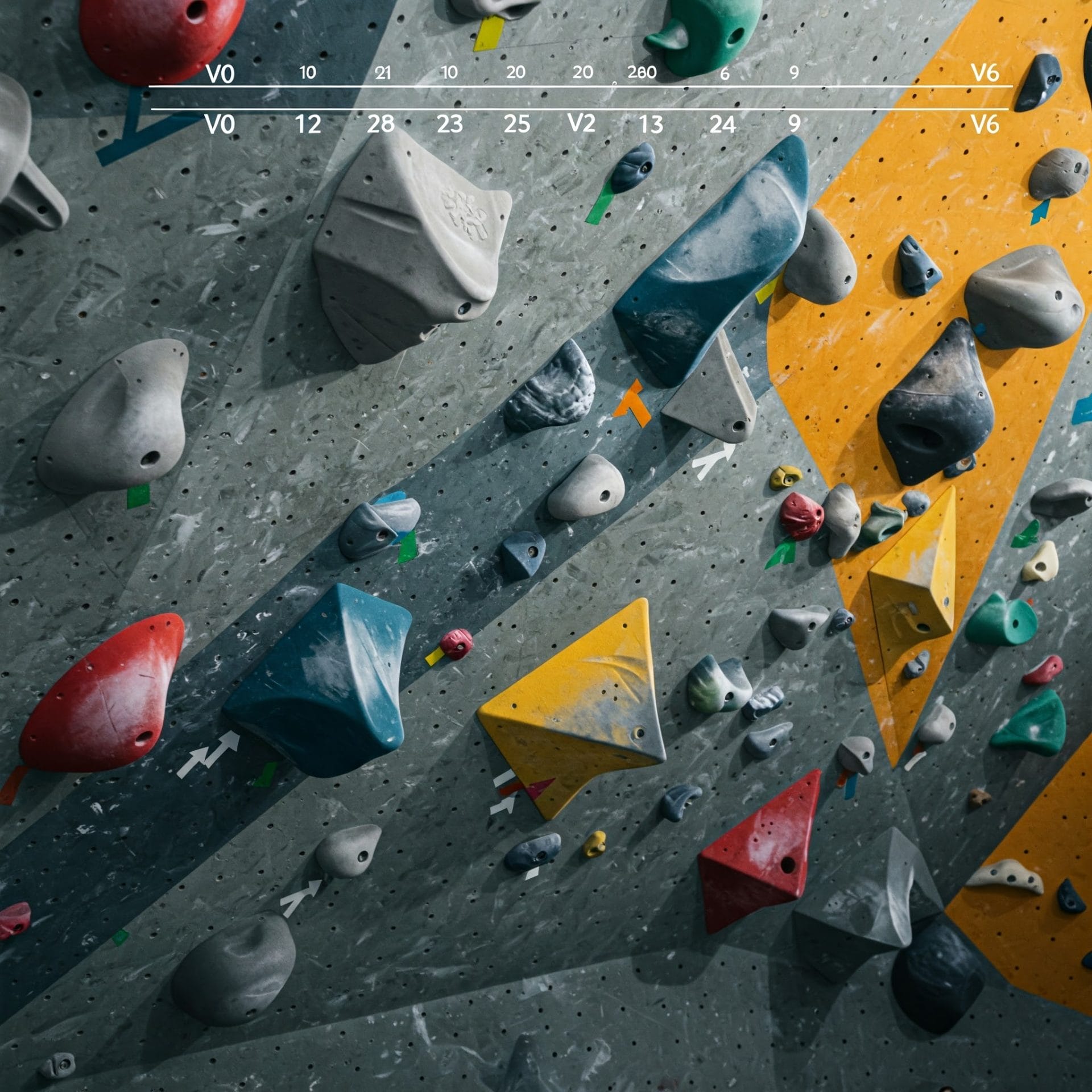
When climbers talk about difficulty, they’re referring to the grading system that measures how hard a climb is. This helps climbers assess which routes are manageable or challenging. Beginners often start by understanding these grades to determine what they can attempt.(2)
There are two main grading systems:
- Fontainebleau (Font) Scale: Common in Europe, especially France. It ranges from 3 to 9A+ and focuses on the style of climbing, such as precision, technique, and body control, rather than pure strength. A Font 6A can be tough due to tricky moves or small holds.
- V-Scale: Used in the U.S., ranging from V0 (easy) to V17 (extremely difficult). The V-scale considers both physical and mental challenges, like body positioning and footwork.
Though the two systems have some overlap, such as Font 5 and V1, both are useful benchmarks for tracking progress. Climbing is about pushing limits, and improvement comes through persistence, not just numbers.
Conclusion
Climbing language shapes how climbers communicate at gyms and crags. The essential vocabulary includes specific terms that define movements and equipment. “Beta” describes the sequence of moves on a route, while “dyno” refers to a dynamic jumping movement. “Jug” indicates a large, positive hold that’s easy to grip. New climbers typically learn these fundamental terms during their initial weeks of practice, creating a shared language within the climbing community.
FAQ
What is bouldering?
Bouldering is a type of rock climbing that focuses on climbing short but challenging routes without the use of ropes. Instead, climbers use crash pads for safety in case they fall. It’s often done on natural rock formations or on indoor climbing walls. The goal is to reach the top of the boulder problem, which is usually around 10 to 20 feet high. It’s a fun way to build strength and technique while enjoying the outdoors or a gym environment.
What does “crux” mean in bouldering?
The crux is the hardest part of a boulder problem. It’s where climbers typically struggle the most. Identifying the crux is important because it helps you focus your energy on the most challenging moves. Climbers often develop strategies on how to tackle the crux efficiently, making it a key moment in their ascent. Once you conquer the crux, the rest of the route can feel much easier!
What are “holds” in bouldering?
Holds are the features on the wall or rock that climbers grab or step on while climbing. They come in various shapes and sizes, like crimps, slopers, and jugs. Each type of hold requires different techniques and strengths. Understanding how to use various holds can greatly improve your climbing skills, and spotting the right holds on a route is part of the challenge.
What does “beta” mean in bouldering?
Beta refers to the tips, tricks, or advice you get about a specific boulder problem. This can include the best way to approach holds, foot placements, or body movements. Climbers often share beta with each other to help improve their chances of completing a route. While some prefer to figure it out themselves, others find beta really useful, especially when tackling a tough problem.
What is a “send” in bouldering?
A send means successfully completing a boulder problem without falling. It’s a huge accomplishment for climbers and often celebrated among friends. When someone sends a route, it shows they’ve mastered the moves and techniques needed to get to the top. Climbers often set personal goals to send specific problems, making it a motivating part of the bouldering experience.
What does “projecting” mean in bouldering?
Projecting is when climbers work on a specific boulder problem over time, trying to send it but not quite succeeding yet. It can take several attempts, sometimes over days or weeks, to finally reach the top. Projecting helps climbers build skill and endurance, as they learn from each attempt and try different techniques. It’s a great way to challenge yourself and improve your climbing.
What is a “crash pad” in bouldering?
A crash pad is a thick foam mat used for safety when bouldering. Climbers place crash pads under the route to cushion their fall. They come in various sizes and shapes, making them portable and easy to carry. Having a crash pad is essential for outdoor bouldering, as it helps prevent injuries and gives climbers more confidence when tackling high problems.
What does “top out” mean in bouldering?
Topping out is when a climber reaches the very top of a boulder problem and stands on it. Instead of just climbing down, climbers often need to navigate a few extra moves to get safely off the boulder. Topping out can feel really rewarding, as it signals the successful completion of the problem. It’s a moment of triumph and often celebrated with cheers from friends!
References
- https://threerockbooks.com/bouldering-terms/
- https://www.theboardroomclimbing.com/faq_category/climbing-jargon/