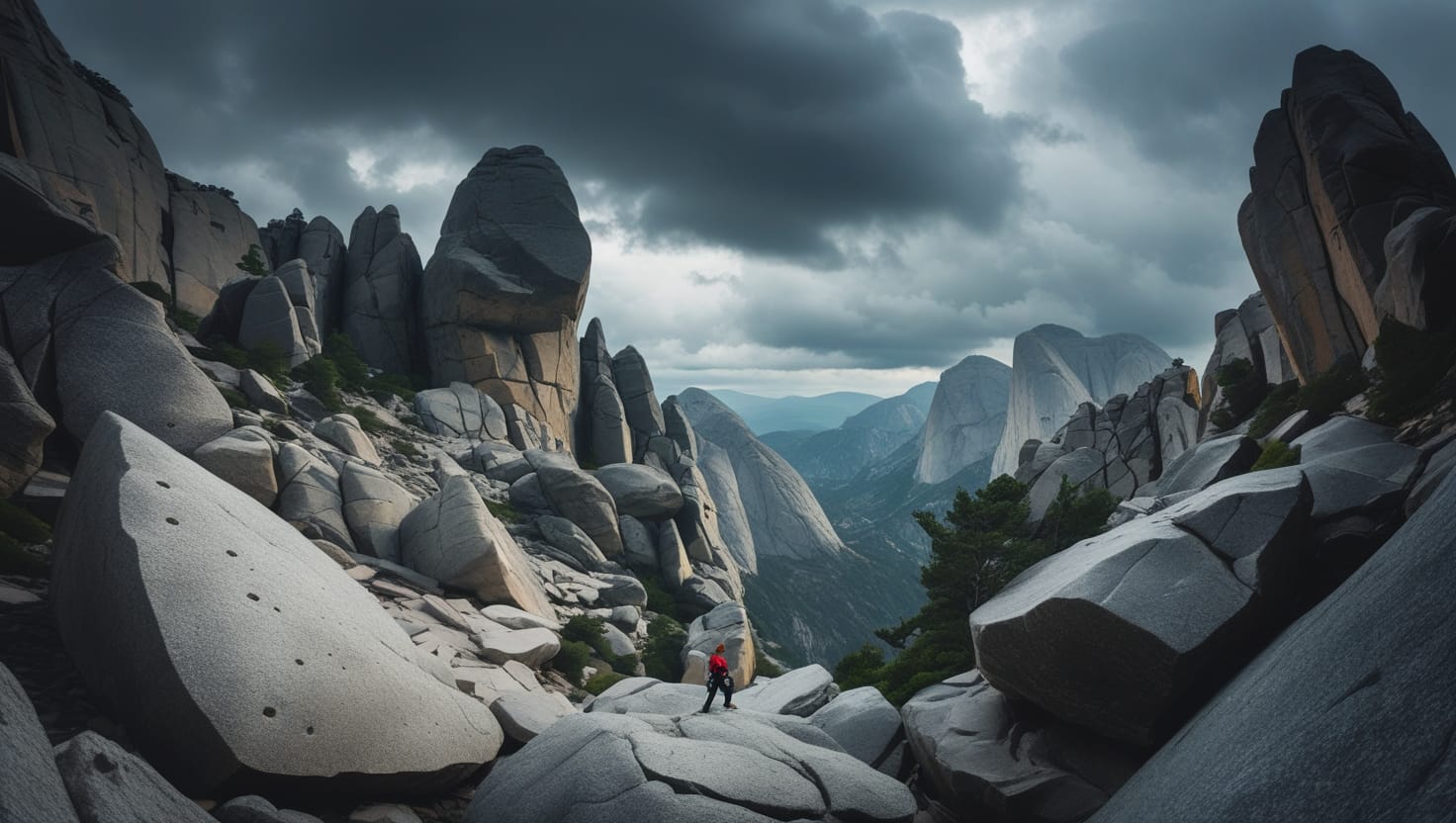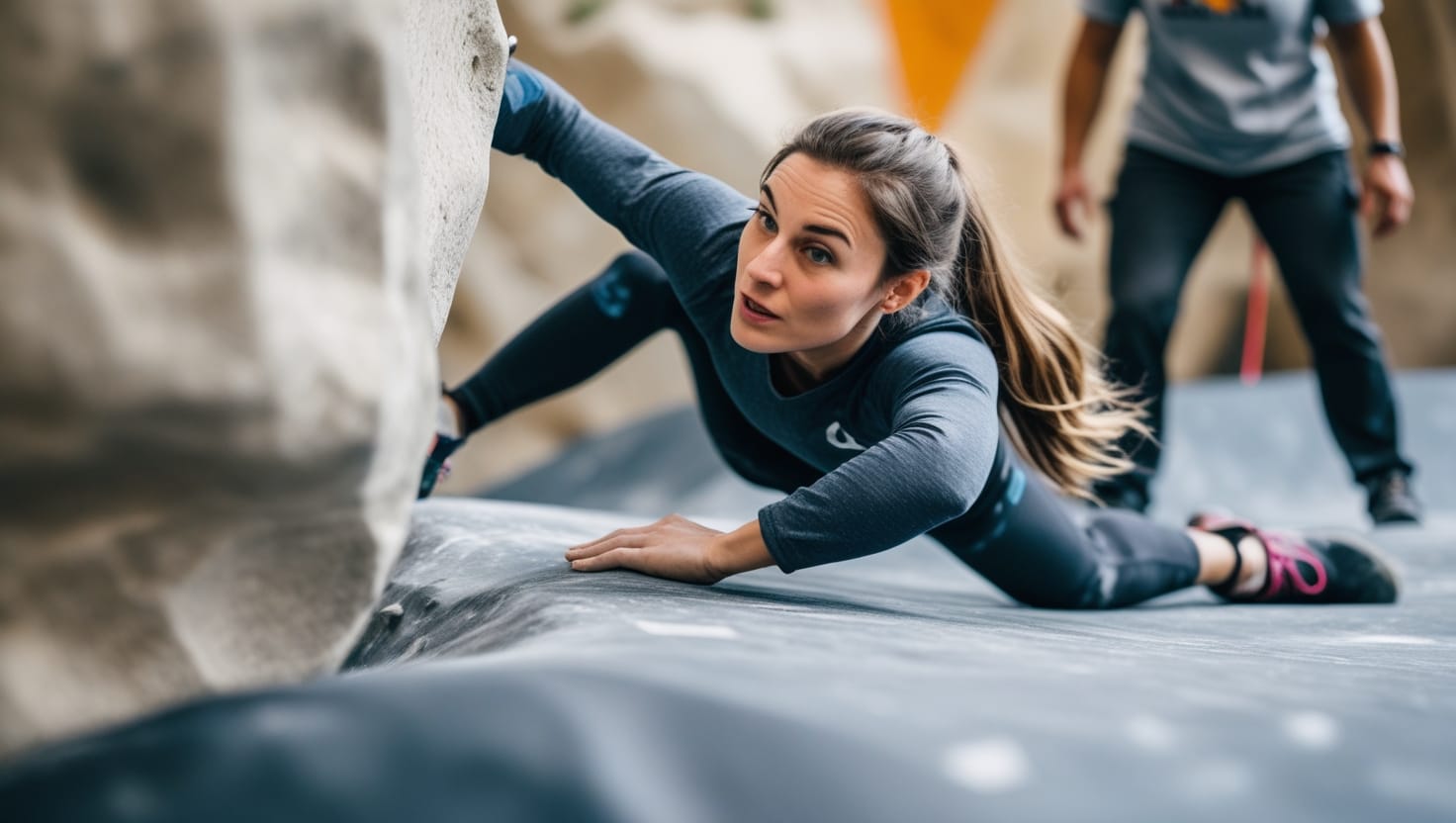
Bouldering is exciting, but beginner safety tips are crucial! Discover beginner safety tips for bouldering, ensuring a secure and fun climbing experience.
Bouldering, a climb without ropes, offers a thrill. But thrill can turn to spill if a body ain’t careful. For beginners, safety basics are must-dos to keep the fun high and the risks low. Falls happen, sure, but smarts can cut down the hurt.
A tumble once, from maybe eight feet up (it felt higher), taught me respect for the mat below (the landing pad). Those mats—they’re crucial. So, what’s a beginner to do? Learn. Practice safe falling. Spot each other. (Spotting helps, doesn’t guarantee perfection.)
These beginner safety tips for bouldering can keep those climbs safe and enjoyable. Want to keep climbing? Keep reading.
Key Takeaway
- Always use crash pads and communicate with spotters when climbing.
- Learn and practice proper falling techniques to minimize injuries.
- Be aware of your surroundings, and know your climbing limits.
Crash Pad Placement
A bouldering pad—it’s more than a cushion, it’s peace of mind. Place ’em right, climb better, maybe. A bad fall onto a good pad beats a good fall onto the ground. That’s just plain fact.
So how does a body place these pads?
- Flat is where it’s at: Ground bumpy? Pad’s gonna shift. A shifted pad is no good at all.
- Fall zones covered: Look up. Where’s the most likely place you’ll land? Cover that. Common sense, sure, but easily overlooked.
- More is more: Highball problems (the tall ones)? More pads. Overlapping? Even better.
Gaps? Those are the enemy. Ankles don’t like gaps.
Before pulling onto the rock, look. Make sure everything looks solid. Adjust as needed. Bouldering safety is only as strong as the placement of your pad. Remember, careful placement of the bouldering pad equals a safer climb. Simple as that.
The goal: Climb hard. Land soft. The tool: Bouldering pads, wisely placed.
Proper Spotting Techniques
Spotting, seems simple, yeah? Standing there, hands up. Nah. Spotting is about guiding a fall. Not catching someone (you usually can’t). It’s about keeping a climber from landing wrong. Crucial stuff, really.
Now, how to do it right?
First, a few things a body needs to do:
- Close, but not too close. Give the climber room, but be ready.
- Talk it out. “Climbing!”… “Spotting!” No surprises.
- Eyes up. Watch the climber’s every move. That’s the job.
Then, when the fall happens—and it will—guide, don’t grab. Push them toward the pads. Protect their head if need be. A stable stance (feet shoulder-width apart) helps with this.
Avoid hazards. Rocks, other climbers, sharp sticks…be aware of your surroundings.
Proper spotting is about being a partner, a guide, a safety net of sorts. It’s an important skill to learn. Spotting done well can mean the difference between a rolled ankle and a walk away. Remember that the spotter must stay aware of the climber to give effective support.
Understanding Personal Limits
Climbing’s a dance with gravity. But gravity always leads. So a body needs to know its limits. Beginners, especially. Pushing past those limits leads to mistakes. Mistakes lead to falls. Falls lead to…well, you get the picture.
So how does a beginner find those limits? It ain’t always easy.
- Easy does it: Start with the easy stuff (V0-V3 problems). Build up strength and skill, slow but sure.
- Listen to the body: Tired? Frustrated? Stop. Rest. Come back later.
- Reach ain’t everything: Don’t lunge for holds way out of reach. It’s a good way to take a whipper.
Consider height too. A 14-17 foot fall can still hurt. Be aware of the height of the bouldering problem that is being attempted.
Practicing falling ain’t a bad idea either. Learn how to land on those crash pads.
Understanding personal limits isn’t about being weak. It’s about being smart. Climbing smart means climbing safe. Climbing safe means climbing more. The goal: to progress, not to get hurt.
Controlled Falling Techniques
Credits: Bouldering Bobat
Falling. Happens to everyone. Even the best climbers take a tumble now and then. The trick ain’t avoiding the fall (can’t always do that). The trick’s falling well. Falling smart. Falling to walk away.
So, how’s it done?
- Bend those knees. Think of it as a shock absorber. The more bend, the less impact on the joints.
- Roll with it. A backward roll spreads the force, minimizes the ouch.
- Flat feet. Landing flat helps keep balance, keeps you from twisting something.
Tuck that chin! Protects the neck. A whiplash ain’t fun.
- Arms are for hugging, not landing. Try to avoid using your arms to break the fall. They ain’t designed for it.
Falling safely is a skill, like any other climbing skill. Practice it. Get comfortable with it. A body that knows how to fall is a body that can climb with more confidence. That confidence, that knowledge, that’s what makes the difference. It can help a beginner feel safer when bouldering.
Avoiding Gaps Between Crash Pads
A gap in the crash pad setup…it’s a twisted ankle waiting to happen. Those gaps, they are the silent threat on the bouldering mat. Beginners, especially, need to be vigilant. Ankle injuries ain’t something to laugh at. Takes time to heal.
So, how to avoid those treacherous gaps?
- Look first. Before even chalking up, check the pads. Snug? Overlapping a bit? Good. Big cracks and spaces? Bad. [1]
- Closed cell is your friend. They tend to conform to uneven ground better, sealing up those sneaky little gaps.
- Move with purpose. When shifting pads around, think about where you might fall next. Don’t just shove them willy-nilly.
Change routes? Change the pads. If you start traversing to the left, make sure there’s adequate padding to the left.
- Talk to your spotter. Get them in on it. “Hey, keep an eye on that crack over there.” Two sets of eyes are better than one.
Avoiding gaps is about awareness, about thinking ahead. It’s about making sure that the landing zone is solid, seamless. That little bit of attention before climbing can make a big difference when a body takes a fall. Beginners who take these precautions can climb confidently.
Communicating with Spotters
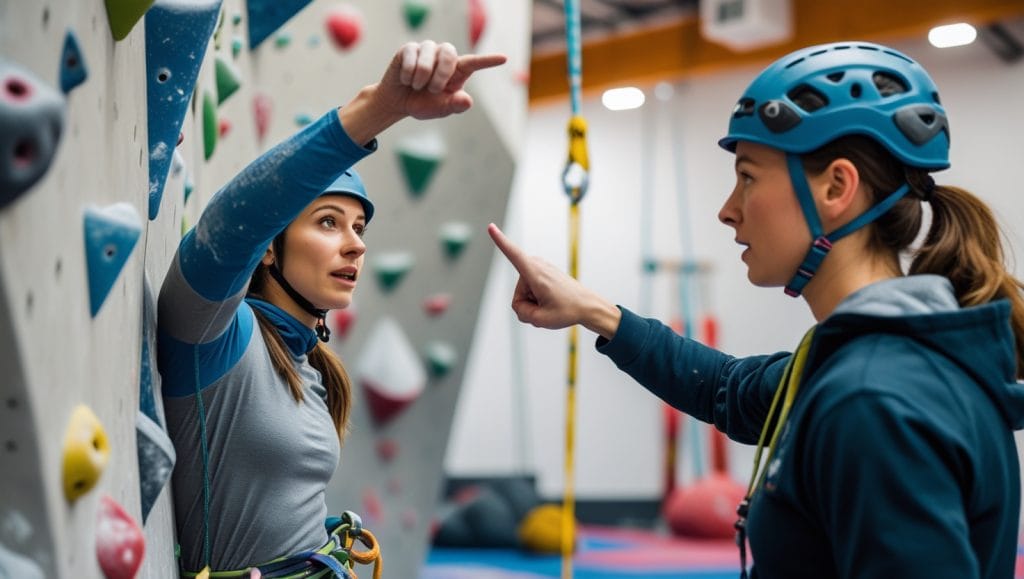
Bouldering might look like a solo sport, but it ain’t. Not really. It’s a partnership. A dance between climber and spotter. And like any good dance, communication is key. Yelling is not communication.
Before pulling onto the wall, take a moment. Talk to the spotter.
- Lay it out: Route, intentions, maybe even where a body thinks they might fall. Helps the spotter be ready.
- Signals are good. Hand signals, a quick shout…something to say, “Ready!” or “Hold up a sec!” [2]
Check in while climbing. A quick glance, a nod. Reassures the spotter.
Fallen? Talk it out. “I’m good!” or “Ow, ankle’s a bit tweaked.” The spotter needs to know. Feedback is gold. Ask the spotter, “How did that look? Anything I could do different?”
Good communication makes for a safer climb. The spotter knows what to expect. The climber feels more secure. It’s about working together, being a team. Bouldering is safer if beginners have these solid communication skills. Remember it is partnership.
FAQ
How should I position crash pads to prevent injuries when falling?
Crash pad placement is crucial for safety. Always position pads to cover your entire potential fall zone, avoiding gaps between crash pads that could lead to injury. For uneven terrain, use closed crash pads to fill gaps in the ground. Before climbing, check surroundings to identify safe fall zones and ensure stable crash pad placement.
When climbing with others, practice strategic crash pad movement as routes change. Remember that proper positioning is more important than quantity—though using multiple crash pads can provide better coverage for higher climbs.
What are the most important spotting techniques beginners should know?
Proper spotting techniques focus on guiding a falling climber safely to the pads, not catching them. Position spotters actively and poised for falls, communicating with spotters clearly about your intentions before climbing. Keep spotters away from hazards like rocks or branches.
As a spotter, stand with arms up, ready to support the climber’s hips and upper back. Avoid walking under active climbers when moving around a bouldering area. Remember that spotting is about directing a fall, not preventing it completely.
How can I fall safely while bouldering?
Controlled falling techniques are essential skills. Practice bending knees while landing to absorb impact, and keep feet flat during landings with a shoulder-width stance. Avoid landing on rigid limbs which can cause injuries.
For higher falls, rolling backward to distribute impact can prevent ankle injuries. Always tuck your chin to prevent whiplash when falling backward. Avoid hand or arm-based falls that can lead to wrist fractures. Before attempting difficult routes, practice falling techniques on soft surfaces first to build confidence.
What should I know about my personal limits as a beginner?
Understanding personal limits is key to safe bouldering. Start with easy routes suitable for beginners rather than immediately tackling challenging problems. Avoid overreaching for holds beyond your skill level and know when to take breaks to avoid fatigue-related accidents.
Listen to your body—if you’re too tired to climb safely, rest. Gradually increase difficulty levels as skills improve. Avoid bouldering beyond height limits (around 14-17 feet for beginners) until you’ve mastered falling techniques and have proper spotting.
How can I use my body efficiently to prevent injuries?
Learning proper body positioning on climbs helps prevent falls and injuries. Keep hips close to the wall during climbs to maintain balance. Use legs for pushing instead of arms for pulling, which conserves energy and reduces strain.
Maintain straight arms when hanging to save strength. Practice efficient hand and foot placements rather than dynamic movements that can be risky for beginners. Warming up before climbing prevents injuries, while cooling down after sessions reduces muscle strain. Good technique is safer than power.
What are important communication practices while bouldering?
Communicating climbing intentions clearly with partners or spotters prevents accidents. Establish verbal signals before climbing—like “climbing” when you start and “falling” if you lose your grip. Stay aware of other climbers nearby to avoid collisions.
When bouldering in groups, take turns on routes and coordinate crash pad placement. Asking for feedback from spotters or experienced climbers after attempts helps improve technique and safety. Clear communication creates a safer environment for everyone.
How can I prepare mentally for bouldering safely?
Planning routes before climbing helps identify potential hazards. Practice mental visualization of routes before physical attempts to prepare for challenging sections. Using proper breathing techniques helps stay relaxed while climbing, preventing panic that leads to mistakes.
Practicing mindfulness reduces fear of falling, which often causes dangerous gripping or freezing. Staying calm and focused during challenging routes improves decision-making. Observing others climb provides route insights and techniques before you attempt a problem. Mental preparation is as important as physical readiness.
Conclusion
Safety is paramount for bouldering beginners. Knowing how to place crash pads, spot correctly, and respect personal limits makes a huge difference. Fall with control, communicate clearly: these further enhance safety.
Follow these beginner safety tips, and a body can enjoy bouldering and minimize risks. Bouldering safety is not just a set of rules, it’s a way of thinking. Keep that safety mindset strong, and you’ll be able to enjoy climbing for a long, long time. Always remember: climb safe!
References
- https://www.cedarville.edu/offices/campus-recreation/climbing-wall/rules
- https://www.tetoncountywy.gov/2763/Climbing-Gym