

Safety in bouldering starts with proper falling techniques, spotting when needed, and knowing how to land—minimizing injury risk on every climb.
Bouldering’s thrill lies in its simplicity—no ropes, no harnesses, just you and the wall. But that freedom comes with risks. Falling is part of the game, and without proper safety, it can hurt. (A typical bouldering fall sends you 6 to 10 feet onto the mat.) The key? Start low, learn to fall, and always use a spotter.
Chalk up for grip, but don’t overdo it—sweaty hands are slippery hands. Check the mat’s placement, too. It’s not just padding; it’s your lifeline. Climb smart, fall smarter. Keep reading to nail the basics and stay safe.
Key Takeaway
- Always warm up before you start bouldering to prevent injuries.
- Learn proper falling techniques to minimize the risk of injury.
- Use mats and spotters to create a safer bouldering environment.
General Safety Tips
Bouldering’s energy is contagious—chalk dust in the air, climbers cheering, the hum of effort. But beneath the excitement, safety’s the quiet backbone. Studies show bouldering’s injury rate is higher than other climbing styles—1.47 injuries per 1000 hours. Nearly half of boulderers get hurt at some point. It’s not just about climbing; it’s about climbing smart.
First, clear the area. Backpacks, water bottles, stray shoes—they’re trip hazards. (A cluttered floor is an accident waiting to happen.) Never stand under someone climbing. The fall zone isn’t a spectator spot. It’s a danger zone. Keep your distance, always.
Crowded gyms? They’re tricky. Climbers crisscrossing, routes overlapping. Awareness is key. Watch where you step, where others are climbing. It’s a dance, really. Follow the gym’s rules—they’re not suggestions. They’re there to keep everyone safe.
Warm-ups matter. A lot. Stretch those muscles, get the blood flowing. (Think arm circles, lunges, maybe a light jog.) Cold muscles tear. Warm muscles perform. After climbing, cool down. Stretch again. It’s not just about feeling good—it’s about staying injury-free.
Here’s a general safety tips quick checklist:
- Clear the fall zone.
- Never climb under someone.
- Warm up for at least 10 minutes.
- Cool down and stretch after.
Bouldering’s fun, sure. But fun’s better when you’re safe. Climb smart, fall smarter, and keep the walls calling you back.
Falling Techniques
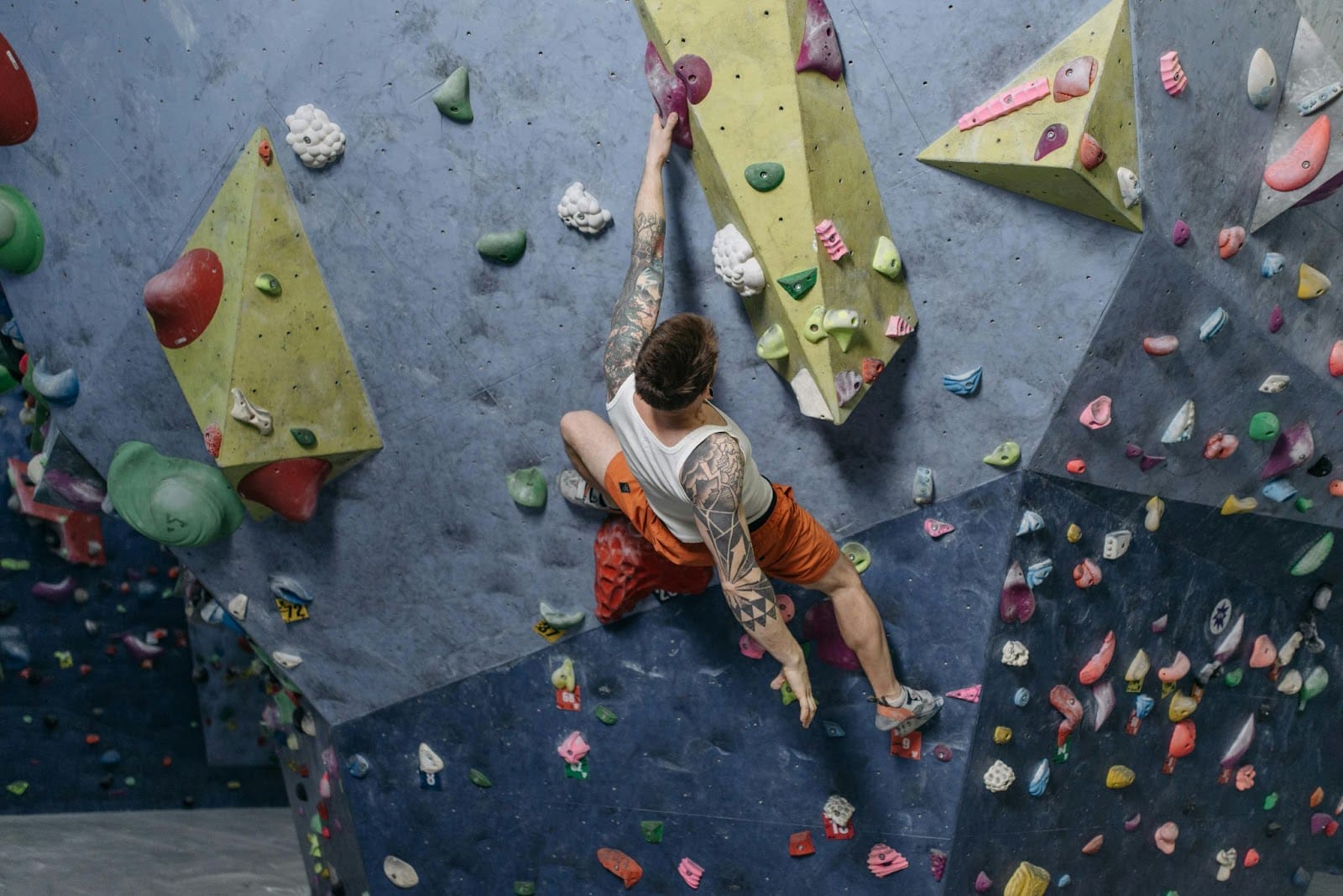
Credits: pexels.com (Photo by Pavel Danilyuk)
Falling happens in bouldering. A lot. Every climber spends time on the mat, whether they like it or not. The key is falling the right way. Some do it naturally, rolling out of a drop like a cat landing on its feet. Others stiffen up, arms flailing. That’s when injuries happen.
The first rule: control the fall. If you’re peeling off a wall, try to push away slightly. Landing too close to the wall increases the risk of hitting holds or twisting an ankle. Aim to land feet first. Knees should bend immediately to absorb the impact (think shock absorbers, not locked-out stilts).
What not to do?
- Catch yourself with your hands. Studies show wrist fractures are common in bouldering falls, especially when climbers instinctively brace with outstretched arms.
- Lock your legs. Straight knees mean all the force goes into your joints instead of spreading out through muscle absorption.
- Tense up. Staying loose helps distribute impact and makes rolling easier.
Instead, let momentum carry you into a back roll—tucking your chin and rounding your spine. The roll spreads out the impact, reducing strain on joints.
Jumping down is another story. Climbing gyms often warn against it, but sometimes there’s no other option. Best approach? A controlled drop:
- Spot your landing before jumping.
- Feet should hit first, with ankles and knees flexing on contact.
- If possible, step down to a lower hold before dropping fully.
- Keep arms in, ready to balance but not brace.
Research links high-impact landings to ankle injuries, especially from heights above 10 feet. Good falling technique takes practice. Some gyms offer fall training, and it’s worth doing. A few drills can make the difference between a hard landing and walking away unscathed.(1)
Spotting
Credits : The Adventure Junkies
A tricky move on the wall, the kind that makes your arms burn and your heart race—that’s when a spotter shines. They’re not just standing there; they’re your safety net. A good spotter’s alert, hands ready, eyes locked on you. Their job? Guide your fall onto the crash pads. Simple, but it can make all the difference.
Indoor overhangs? They’re a whole different beast. Sometimes the matting’s thin, or the angles are awkward. That’s when spotting becomes critical. Always wait for the climber to finish before walking through their fall zone. It’s not just polite—it’s smart. One wrong step, and you’re in the way of a falling climber.
Spotting isn’t passive. It’s active, engaged. A spotter’s got to be ready to move, to react. Communication’s key. Before the climber goes for that big move, they should talk it through with their spotter. Where’s the fall likely to happen? How’s the landing? A quick chat keeps everyone on the same page.
Here’s what makes a good spotter:
- Hands up, ready to guide.
- Eyes on the climber, always.
- Feet planted, but ready to move.
- Clear communication before the climb.
Spotting’s not just about catching falls. It’s about trust, teamwork, and keeping the climb fun. A good spotter doesn’t just watch—they make sure you’re safe to try again.
Equipment and Area
The ground tells a story. Scuffed crash pads, chalk dust, maybe a forgotten brush—it all says someone climbed here, someone fell. Setting up a safe climbing area isn’t just about throwing pads down and hoping for the best. It takes attention, adjustment.
Crash pads need to go under the crux, where the hardest moves happen. Those spots see the most falls, and a bad landing on uneven padding can twist an ankle fast.
Checklist for pad placement:
- Cover the crux (where falls are most likely)
- Overlap pad edges slightly to prevent gaps
- Keep pads flat—no folds, no buckling
- Adjust as needed for different landing zones
Indoor gyms help with this—thick mats cover the whole floor, reducing risk. But they don’t make falls harmless. Most facilities limit boulder problems to between 3 and 4.5 meters for a reason. Land wrong from that height, and you’ll feel it.
Before a climb, always check for hazards:
- Water bottles, brushes, or loose gear
- People standing too close
- Uneven or shifted mats
- Overcrowded fall zones
Climbing past set height limits isn’t just reckless; it’s dangerous. Going higher means more impact, and gym mats aren’t designed for it. Even with good padding, supervision matters—especially for new climbers or kids. Spotters help, too, but only if they know what they’re doing.
Safety isn’t just about gear. It’s awareness, respect for limits, knowing when to step back. A well-placed pad, a clear landing zone—small things, but they make all the difference.(2)
Other Considerations
Bouldering gyms get crowded fast. Too many climbers on the wall? Accidents happen. At least a meter of space keeps everyone safe. More if falls are likely.
Beginners don’t always check before climbing—bad idea. Someone dropping from the top? That’s a hard landing (for both people). Never climb above or below another climber. It’s not just etiquette. It’s safety.
A good warm-up prevents injuries. That means easy problems first—big holds, slow movement, full-body activation. Rushing into harder climbs? That’s how tendons get tweaked.
Strength matters, but so does knowing your limits. Feeling off? Take a break. Bouldering’s demanding (shoulders, fingers, core). Pushing through fatigue? Recipe for injury.
Falls are part of the sport. Knowing how to land—knees soft, rolling if needed—prevents sprains. Spotters help, but only if they know what they’re doing (arms out, guiding, not catching).
Climb smart, watch out for others, and keep it fun.
FAQ
What are the essential bouldering safety practices?
Bouldering safety starts with risk awareness and proper falling techniques. Always check crash pads for correct placement, assess fall zones, and use controlled falls to minimize injury risk. Spotting techniques help, but personal responsibility is key—know your limits. Safety gear like climbing shoes and chalk improves grip, while relaxation techniques reduce muscle tension during falls.
Injury prevention also means warming up, practicing safe body positioning, and following climbing etiquette to avoid collisions. Awareness of surroundings and safety protocols at climbing facilities further ensures a safer climbing environment.
How do proper falling techniques reduce climbing injuries?
Falling techniques help with impact absorption and joint protection. Controlled falls lower injury risk by emphasizing soft landings—bending knees, keeping arms relaxed, and rolling on impact. Fall practice drills improve body control, reducing climbing accidents caused by panic reactions. Fall zones should be clear, and crash pads must be well-placed for safety. Spotter communication ensures better spotting responsibilities.
Safety workshops and climbing certifications teach these skills, reinforcing safety education. Climbing community safety improves when climbers prioritize fall risk assessment and use safe landing strategies.
What are spotting responsibilities in bouldering?
Spotting techniques prevent ground falls and reduce injury statistics. A good spotter helps guide a climber’s body positioning toward safer landings while avoiding excessive muscle tension. Spotting methods vary, but strong spotter communication is key. Climbers should establish safety protocols before attempting a climb, ensuring they agree on spotting responsibilities.
Pre-climb checks help confirm that crash pads are positioned correctly, fall zones are clear, and the climbing environment is safe. Safety reminders include maintaining focus and avoiding distractions while spotting. Proper training for bouldering improves risk management strategies.
How does climbing etiquette contribute to safety?
Climbing etiquette isn’t just about respect—it’s a core part of bouldering safety. Being aware of surroundings prevents collisions and unnecessary climbing accidents. Fall zones should remain clear, and climbers should communicate about route intentions. Spotting techniques, crash pad placement, and safety reminders are part of responsible climbing community engagement.
Following safety guidelines also means conducting equipment checks, respecting safety education efforts, and practicing personal responsibility. Bouldering challenges are safer when climbers cooperate, adhere to safety protocols, and contribute to a supportive climbing culture.
What role does mental preparation play in bouldering safety?
Mental preparation helps climbers manage fear, maintain body control, and use safety gear properly. Relaxation techniques prevent unnecessary muscle tension, which affects impact absorption during falls. Training programs that include fall practice drills build confidence and improve controlled falls. Climbing safety resources emphasize safety education to reduce climbing injuries and promote smart fall risk assessment.
Safety workshops and climbing certifications enhance risk management strategies, helping climbers feel more secure. A well-prepared mindset leads to better decision-making, reducing unsafe climbing habits and increasing overall climbing community safety.
Conclusion
Bouldering’s joy is in its raw simplicity, but safety keeps that joy alive. Falls happen—quick, sudden, sometimes awkward. (A good mat absorbs impact, but it’s not magic.) Warm up those muscles, 10 minutes minimum. Learn to fall: tuck, roll, don’t stiffen. Spotters help, but they’re not a guarantee. Check your gear, even if it’s just shoes and chalk.
Climbing’s about fun, sure, but fun lasts longer when you’re careful. Stay low, stay smart, and keep climbing. Safety isn’t just a rule; it’s the way to keep the walls calling you back.
Related Articles
- https://boulderingonline.com/bouldering-safety-tips/
- https://boulderingonline.com/spotter-etiquette/
- https://boulderingonline.com/crash-pads-for-bouldering-2/
References
- https://5.life/blog/2024/09/17/proper-falling-technique-when-bouldering/
- https://www.theguardian.com/thefilter/2025/feb/25/bouldering-climbing-equipment


 MichaelRow says:
  Albertoomido says:
  StevenGOM says:
  Bangladesh says:

