

New to climbing? Learn essential bouldering common terms like crux, dyno, and flash, to improve your skills and communicate like a pro.
Bouldering’s got its own language, a mix of grit and grace. You’ve got your crimp (a tiny hold you pinch hard), jug (a big, friendly hold), and sloper (smooth, sloping, and mean). Then there’s beta—the secret recipe to climb a route. Dyno? That’s a leap of faith.
Spotting isn’t just looking; it’s protecting your buddy. And send? That’s the sweet victory of finishing a problem. Without these words, you’re just grabbing rocks. So, keep reading. Learn the lingo, and you’ll climb smarter, not harder.
Key Takeaway
- Knowing climbing slang helps you communicate on the wall.
- Beginners should learn basic climbing words first.
- Advanced climbers should master technical terms and grip terminology.
Bouldering Glossary
Bouldering’s got its own language, a kind of secret code that binds climbers together. Walk into a gym or a crag, and you’ll hear words like “crux” or “problem” tossed around like they’re common knowledge. The crux? That’s the hardest part of a climb, the spot where most folks get stuck. A problem? It’s the route itself, a puzzle to solve with your hands and feet.
These terms aren’t just jargon—they’re tools. Tools that let climbers share stories, swap tips, and build a sense of community.
Take “beta,” for example. It’s not just a word; it’s a lifeline. Beta means advice on how to tackle a specific problem. Maybe it’s a suggestion to use a heel hook or shift your weight just so. For a beginner, knowing this term can feel like cracking a code. Suddenly, they’re not just listening—they’re learning, engaging, and maybe even contributing.
A glossary isn’t just a list of definitions. It’s a bridge. It connects new climbers to the culture, the people, and the sport itself. Without it, the climbing world can feel like a closed door. With it, that door swings wide open.
Climbing Terminology
Credits : Bouldering Bobat
Climbing’s got its own rhythm, its own way of talking. Words like “mantle” and “bicycle” aren’t just terms—they’re moves, techniques, ways to conquer the rock. A mantle, for instance, is when you push down on the top of a hold to lift yourself up. It’s simple in theory but takes strength and precision to pull off.
Then there’s the “bicycle.” It’s a clever move where one foot pushes while the other hooks, creating balance on overhanging routes. It’s not just about strength; it’s about finesse, about knowing how to use your body to its fullest.
Learning these terms isn’t just about sounding like a pro. It’s about understanding the sport, about being able to ask for help or offer advice. It’s about feeling like you belong, whether you’re at a local gym or a rugged crag.
Here’s a quick list of terms every climber should know:
- Crux: The hardest part of a climb.
- Problem: The route you’re trying to solve.
- Beta: Tips or advice on how to complete a climb.
- Mantle: Pushing down on a hold to lift yourself up.
- Bicycle: Using opposing foot placements for balance.
Knowing these terms won’t just make you a better climber—it’ll make you part of the community. And that’s where the real magic happens.
Common Bouldering Jargon
Bouldering’s got its own flavor of language, words that pop up in conversations like confetti. When someone finishes a route, they might yell “send!”—a shout of victory, pure and simple. Then there’s “flash,” which means nailing a climb on the first try, no beta, no practice. It’s a badge of honor, a moment of pride.
And don’t forget “slab.” It sounds easy, right? Just a flat rock face. But slabs can be sneaky. They demand balance, precision, and a whole lot of trust in your feet. Knowing these terms isn’t just about sounding cool—it’s about feeling like you’re part of the crew. It’s about sharing the stoke when someone sends a tough problem or flashes a tricky route.
Here’s a quick list of common jargon:
- Send: Completing a climb.
- Flash: Sending a climb on the first try without prior knowledge.
- Slab: A flat, often deceptively difficult rock face.
These words aren’t just labels. They’re keys to the climbing community, a way to connect, celebrate, and keep the stoke alive.(1)
Climbing Slang
Climbing slang’s where things get fun. It’s casual, playful, and full of energy. When someone says a climb is “sick,” they’re not talking about a cold—they mean it’s awesome. A “sick send” is even better, a climb done with style and skill.
Then there’s “buildering,” the art of climbing buildings or other man-made structures. It’s bouldering’s urban cousin, a way to take the sport to the streets. It’s not for everyone, but it shows how creative climbers can be.
Slang adds color to climbing conversations. It’s not just about the moves or the grades—it’s about the vibe. It’s about laughing over a tough problem, cheering on a friend, or just sharing the love of the sport.
Here’s a quick rundown of climbing slang:
- Sick: Really cool or impressive.
- Sick send: An awesome climb.
- Buildering: Climbing buildings or urban structures.
Slang’s not just words. It’s a way to keep climbing fun, light, and full of life. Whether you’re at the gym or the crag, it’s the language of stoke.
Beginner Terms
Starting out in bouldering can feel like learning a new language. But a few key terms can make all the difference. Take “hold,” for example. It’s just a spot on the rock where you grab, but knowing what to call it helps. It’s the first step to feeling like you belong.
Then there’s the “crash pad.” It’s not just a mat—it’s your safety net. When you fall (and you will), the crash pad’s there to catch you. Along with climbing shoes and chalk, it’s one of the three essentials every boulderer needs. Knowing these terms isn’t just practical; it’s empowering. It lets you ask questions, get advice, and start climbing with confidence.
Here’s a quick list of beginner terms:
- Hold: A spot on the rock where you grip or step.
- Crash pad: A padded mat used to cushion falls.
- Chalk: Powder used to keep hands dry for better grip.
These words are the foundation. They’re the first step to feeling like part of the climbing community.
Advanced Climbing Terms
Once you’ve got the basics down, it’s time to level up. Advanced terms open the door to more complex moves and strategies. Take “dynamic,” for instance. It’s not just a word—it’s a move. A big, explosive jump to reach a hold. Then there’s “static,” the opposite. Slow, controlled, all about balance.
“Bridging” is another game-changer. It’s a technique where you push out with hands and feet, often in corners or between holds. It’s a lifesaver on routes where balance is key.
Here’s a quick rundown of advanced terms:
- Dynamic: A powerful, jumping move to reach a hold.
- Static: Slow, controlled movement to maintain balance.
- Bridging: Pushing out with hands and feet for stability.
Mastering these terms isn’t just about sounding smart. It’s about understanding the sport, sharing strategies, and tackling tougher climbs. It’s about growing as a climber.
But there’s more. Terms like “gaston” (pulling outward on holds like you’re opening elevator doors) or “flagging” (using a leg to counterbalance) can change how you approach a problem. They’re not just words—they’re tools. Tools that help you read the rock, plan your moves, and push your limits.
And then there’s “crimping.” It’s not just a grip—it’s a way of life for some climbers. Using the fingertips to cling to tiny holds, it’s a skill that takes strength, precision, and a whole lot of practice.
Here’s a few more advanced terms to know:
- Gaston: Pulling outward on holds, like opening doors.
- Flagging: Using a leg to counterbalance your body.
- Crimping: Gripping small holds with fingertips.
These terms aren’t just for show. They’re the language of progression, the words that help climbers share beta, celebrate sends, and push each other to new heights. Whether you’re working on your first V4 or projecting a V8, these terms are your guide to the next level.(2)
Basic Climbing Words
Some words stick. “Belay” is one of them. It means to hold the rope while another climber moves upward (or downward). A simple word, but it carries weight—literally. If a climber falls, the belayer catches them. No hesitation, no second chances.
Then there’s “chalk.” It dries sweaty hands, improving grip on rock or plastic holds. Different forms, same purpose:
- Loose chalk:Powdery and easy to apply.
- Chalk balls: Contained in mesh, reducing excess dust.
- Liquid chalk: Dries fast, lasts longer, less mess. Without it, fingers slide, and confidence drops. (Gyms often require chalk bags to minimize mess.)
Types of holds climbers use:
- Jug: Big, easy-to-grab (like a handle).
- Sloper: Smooth, rounded, relies on friction. Knowing the difference? Essential for reading a route.
- Belay: To hold the rope for a climber.
Climbers also use different foot techniques:
- Smear: Pressing shoe rubber against the wall for traction.
- Heel hook: Using the heel to stay on overhangs.
Language shapes climbing. These words aren’t just jargon—they’re tools. Learn them, use them. It makes everything smoother, from partner communication to tackling your next project.
Technical Terms
Technical terms are vital for climbers looking to advance their skills. Words like “overhang” describe a steep section of rock that sticks out, while “traverse” indicates moving sideways instead of going straight up. These terms help climbers discuss techniques and strategies.
A related term is “bulge,” which refers to a rounded roof or overhang. Understanding the difference between a sharp overhang and a bulge can completely change how you approach a climb, as each requires different techniques and body positioning.
Here’s a quick rundown of technical terms:
- Overhang: A steep section of rock that sticks out.
- Traverse: Moving sideways across the rock.
- Bulge: A rounded roof or overhang.
Mastering technical terms can truly enhance a climber’s experience. It’s like having a key to unlock new levels of understanding. When climbers talk about these terms, it can lead to discussions about different approaches to climbing problems.
For those who want to climb like a pro, grasping these terms is a must. It can help climbers learn new skills and improve their performance. There’s something rewarding about being able to communicate clearly and effectively with fellow climbers.
Grip Terminology
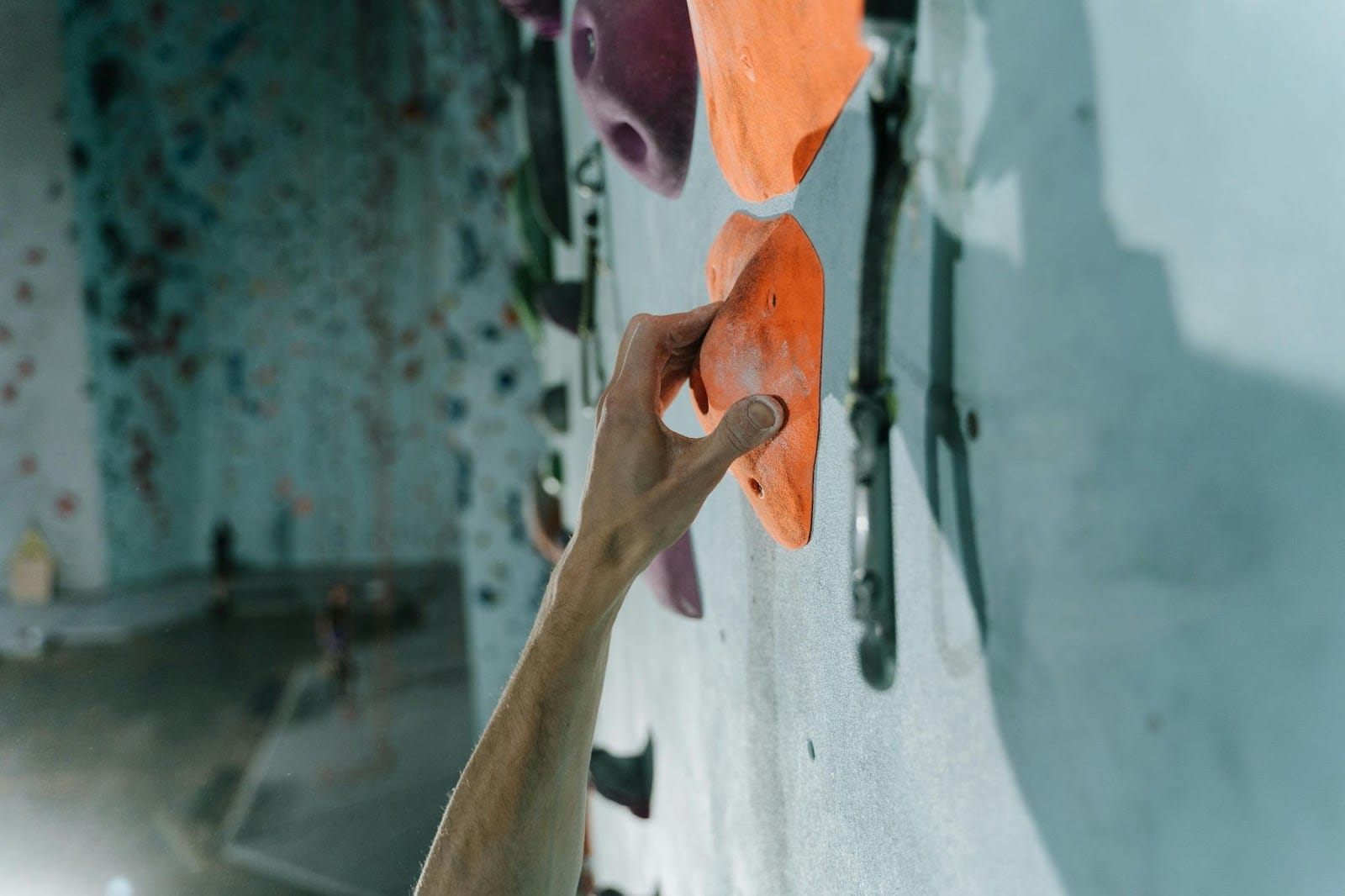
Credits: pexels.com (Photo by cottonbro studio)
Grip terminology is all about how climbers hold onto the rocks. Different grips can change the way a climber approaches a route. For instance, a “crimp” is where you hold onto a small edge using your fingertips. “Open hand,” on the other hand, is when you grasp a larger hold with your palm open.
Knowing how to talk about grips can help climbers find the best way to tackle different routes. It can also lead to discussions about techniques among friends.
Here’s a quick list of grip terms:
- Crimp: Holding a small edge with fingertips.
- Open hand: Grasping a larger hold with an open palm.
- Pinch: Squeezing a hold between thumb and fingers.
Being able to discuss grip terminology is crucial for mastering bouldering. It helps climbers understand how to use their hands effectively and improve their climbing techniques. Plus, it’s another way to connect with others in the climbing community.
Understanding Climbing Language
Understanding climbing language is essential for all climbers. It helps with communication and keeps everyone safe while climbing. At first, someone might feel nervous and unsure, but the more they practice, the easier it gets.
With the explosive growth of bouldering – 64% of new climbing gyms in 2021 were exclusively bouldering facilities – more and more people are learning this special language. These gyms create perfect spaces for beginners to pick up terminology from more experienced climbers in a supportive environment.
Listening to others and asking questions can make anyone a better climber. The excitement of learning new terms and using them in conversations creates bonds among climbers.
So, don’t be afraid to jump into conversations and share thoughts, even if it feels a bit daunting. Embracing the climbing language can lead to new friendships and a deeper appreciation for the sport. It’s all about enjoying the climb and the community that comes with it.
FAQ
What is the difference between a bouldering pad and a bouldering mat?
A bouldering pad is a thick, portable crash pad used to protect climbers from a fall, while a bouldering mat is a thinner gym-style pad covering a larger area. Outdoor climbers rely on bouldering pads for safety, often arranging them to cover hazards. Indoors, mats provide broad protection but aren’t as easily moved. Regardless of location, proper spotting helps prevent injuries.
How does body position affect grip strength in bouldering?
Your body position changes how much effort your fingers need to hold on. Keeping tight body tension prevents swinging, especially on overhangs. Using techniques like flagging or a drop knee can shift weight efficiently, reducing strain. A relaxed open hand grip is useful on slopers, while a crimp helps on small holds. Good footwork also takes pressure off your arms, helping conserve stamina.
What is barn-dooring, and how do you prevent it?
A barn-door happens when your body swings uncontrollably off the wall, usually due to poor footwork or lack of body tension. To prevent it, use opposing forces like a side pull and a foothold on the opposite side. Engaging your hip flexor muscles and keeping a strong core also helps. On steep climbs, a heel hook or flagging can improve stability.
What’s the difference between a dyno and a static move?
A dyno is a jump where both hands leave the wall, requiring explosive power. It’s riskier but useful for big moves. A static move is slower and more controlled, relying on careful grip, balance, and a resting position. Climbers use static techniques when holds are too far apart for a power move but not far enough to require a dyno. Choosing between them depends on the problem and your stamina.
What are the best techniques for climbing a slab?
A slab is a low-angle wall where balance and footwork matter more than grip strength. Instead of pulling hard, focus on precise stepping through, keeping your weight over your feet. Flagging helps with stability, and a controlled rockover lets you move upward smoothly. Sometimes, a mantle or smear is necessary when holds are small or nonexistent. Patience and confidence are key on slabs.
How do you climb an overhang without getting pumped?
On an overhang, conserving energy is crucial. Stay close to the wall, engage body tension, and use efficient footwork like a heel hook or drop knee. Rest on good holds like a jug, using a proper resting position to recover. Shorten moves by keeping arms bent and using stamina-saving techniques like match or bump to avoid overgripping. Climbing too aggressively leads to getting pumped fast.
What’s the best way to top out on a boulder problem?
Topping out means climbing over the top of a boulder rather than jumping off. A common technique is a mantle, where you push down like getting out of a pool. If the lip is slopey, using a knee bar or heel hook helps with stability. Keep your body position low and controlled, avoiding sudden movements. Spotters should be ready for a potential fall if the topout is tricky.
What does it mean to bump in climbing?
A bump is when you move the same hand twice in a row on a hold to adjust position or reach farther. This is useful when a direct reach is too long or when improving grip. It’s often used in combination with stamina-saving techniques on steep terrain. On a prow or overhang, bumping between a crimp and a jug can make a move more efficient.
How do you use a knee bar in bouldering?
A knee bar is a technique where you wedge your knee against a hold, creating a hands-free rest. It works best on steep terrain with deep pockets, large volumes, or big stalactites. The goal is to generate tension between your foot and knee, reducing arm fatigue. A well-placed knee bar lets you recover mid-route and plan your next power move or dyno.
What’s the difference between buildering and scrambling?
Buildering is climbing urban structures like buildings or bridges, often done for fun or as a challenge. Scrambling is climbing rocky terrain that’s steeper than hiking but doesn’t require ropes. While both involve ascending without full climbing gear, buildering is more urban and often illegal, while scrambling is common in the mountains. In both cases, understanding grip, footwork, and body position helps with safety and efficiency.
Conclusion
Bouldering’s a language of its own, and learning it’s the key to climbing smarter. Words like crimp, jug, and dyno aren’t just slang—they’re tools. They help you understand the rock, the moves, and the people around you. Knowing the terms makes it safer, too. You’ll spot better, read beta faster, and maybe even send that problem you’ve been stuck on.
So keep climbing, keep learning the lingo. It’s not just about the rocks—it’s about the stories they tell. And you’re part of that story now.
References
- https://brixton.substation.co.uk/blog/your-handy-glossary-to-bouldering-jargon
- https://awesomewalls.ie/how-to-understand-climbing-terminology/


 TRY TO says:

