
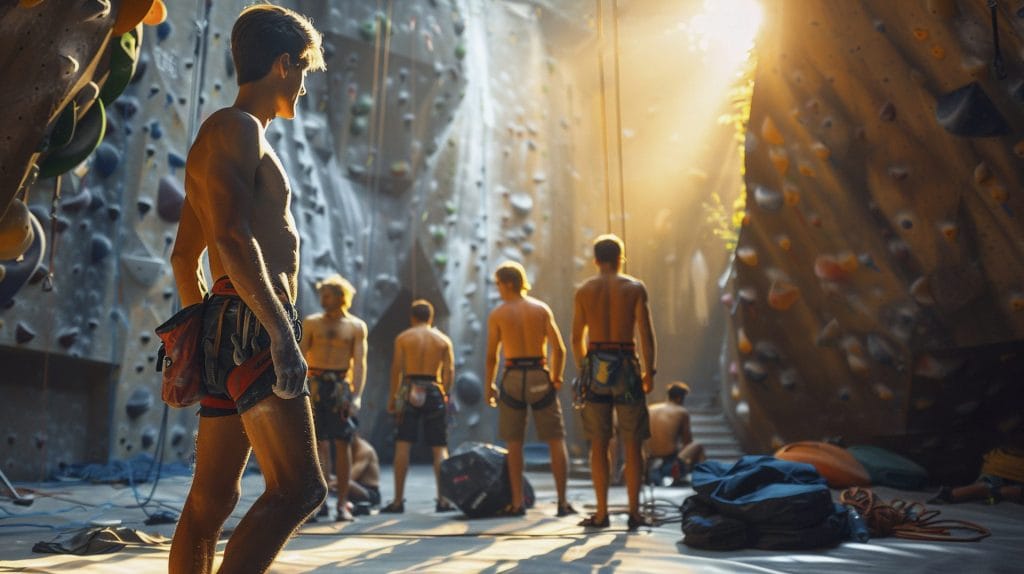
Bouldering intrigues many as both an exciting and challenging activity. It involves climbing short rock routes, called “problems,” without safety ropes. Climbers rely on thick crash pads below to cushion any falls. This sport draws on both physical strength and mental skills for solving climbing puzzles. According to renowned climber Ed Viesturs, “Getting to the top is optional. Getting down is mandatory.” For those interested in learning more about bouldering and how to safely start, keep reading below.
Key Takeaway
- Bouldering involves climbing short rock routes without safety ropes, generally under 20 feet high.
- Safety gear for bouldering includes climbing shoes to help grip rock, chalk for dry hands, and thick crash pads to cushion falls.
- Bouldering provides an enjoyable social activity improving strength and puzzle-solving skills.
What is Bouldering?
Credits : theclimbinghangar
Bouldering is a fun type of rock climbing where climbers don’t use ropes or harnesses. Instead of climbing tall rock faces, bouldering involves shorter routes that are usually less than 20 feet high. This allows climbers to focus on their technique without worrying about safety equipment.
To cushion any falls, thick mats called “crash pads” are placed on the ground below the climbing route. Using these pads keeps bouldering safe so anyone can enjoy climbing without fear of getting hurt.
Each bouldering route takes climbers through different hand and foot positions. Climbers have to use their whole body to solve the climbing “problems” on the rock. This tests their grip strength and balance as they make their way to the top.
Figuring out how to complete each route is like solving a puzzle. Climbers have fun practicing different moves to overcome the challenge. They improve their skills through trial and error. This mental and physical challenge is what makes bouldering so exciting.
Best of all, bouldering can be done in many places. Routes are found in parks, gyms with artificial walls, and sometimes even on small rocks outdoors. Whether inside or outside, bouldering offers adventures for climbers to discover around their town. Its accessibility makes this a great sport for anyone to try (1).
Getting Started with Bouldering

It’s easy for anyone to start bouldering. Many climbing gyms offer beginner classes that teach the basics. The gyms have special climbing walls built just for bouldering. They provide all the gear like shoes and chalk bags during the lesson. This lets newcomers try climbing right away.
Outdoor rocks are also popular places to climb. Areas like Joshua Tree and Hueco Tanks have beautiful stone formations perfect for bouldering. Climbers can practice their skills while enjoying nature. No matter where they go, bouldering is fun exercise that introduces people to new friends.
Joining a gym is a great first step. The staff really want to help newcomers feel comfortable. They offer advice on technique and safety. Plus, gyms often have clubs where friendships form between regular climbers. This community support helps beginners gain confidence.
Safety must come first when starting out. New climbers should always use pads in case of falls. It’s also smart to climb with a partner at first. They can spot for each other to reduce risks. With guidance and practice over time, climbers will quickly improve their skills and feel more secure. The friendly gym environment makes learning bouldering an exciting adventure.
Bouldering Equipment

To climb safely, beginner boulderers need a few key things. Special shoes are first – they grip the rock much better than regular shoes. Bouldering shoes are snug fitting with sticky rubber on the bottom for traction. This helps feet stay put on tricky moves.
Chalk is also important to keep hands from sweating. Climbing chalk absorbs moisture so hands don’t slip. Dry hands give better grips, helping climbers feel secure. Most boulderers chalk up before each climbing problem.
Crash pads are essential safety gear. They cushion falls to prevent injuries. When going outside, multiple pads are stacked to provide protection from any height. Pads can make rock falls much less scary.It’s good for new climbers to learn the climbing grade levels too. The most common rating system uses letters and numbers like V1 or V5. Easier problems have lower numbers while very hard routes use high numbers. Knowing grades lets boulderers pick challenges matching their skill set. This makes climbing more fun as abilities improve over time (2).
The Community of Bouldering
Bouldering is about more than just climbing. People really like to work together to complete routes. Many climbers enjoy how welcoming and supportive climbing groups are. Gyms and outdoor spots feel friendly because everybody cheers each other on.
In gyms, all sorts of people from different ages and backgrounds climb side by side. They help out by sharing advice so newcomers don’t feel alone. This kind of encouraging community makes bouldering motivating.
Competitions are also popular. In contests, climbers try challenging routes to showcase their skills. Competing can be exciting for beginners and experts alike. Some train hard to participate, so the sense of accomplishment feels great.
The social side really enhances bouldering. Many climbers become good friends spending time at the gym or outdoors. Tips and encouragement from others makes climbing a fun shared activity. The bond between boulderers means the sport invites belonging alongside exercising. Overall, people enjoy bouldering as much for camaraderie as for the activity itself.
Physical and Mental Benefits
Bouldering provides a lot of advantages for both the body and mind. Physically, it gives climbers a full workout helping them build strength, suppleness, and endurance. They practice grip force, upper body muscle, and also finger power during the different climbing problems. This variety of motions develops a solid all-round body.
In terms of thinking, bouldering encourages critical thinking. Each route means planning the sequence of hand and foot positions needed. This puzzle-solving part keeps climbers engaged and focused. It’s a fun way to boost willpower and resilience as climbers overcome challenges. Many notice more self-assurance after tackling difficulties.
Moreover, bouldering improves coordination and balance abilities. Climbers learn quick body positioning and changes. These skills help with other sports too.
Regular sessions likewise enhance overall fitness. As strengths and flexibility improve, climbers may feel more energy and better posture in everyday life. This makes bouldering a great choice for anyone wanting to stay active and healthy.
Outdoor vs. Indoor Bouldering
Bouldering happens inside or outside. Indoors, climbing gyms have special rock walls with routes. These places offer a safe way to practice skills year-round. Gyms also provide classes and lessons to aid improvement.
But being outside gives climbing a fun adventure. Boulderers explore beautiful natural spots like parks or protected lands. They enjoy nature’s sights while challenging themselves on real stone shapes. Popular outside areas for climbing rocks include Joshua Tree and Hueco Tanks.
Getting outside adds more excitement too. Climbers hike to uncover hidden boulders in remote spots. Finding these adds discovery to climbing. Connecting with the environment makes outdoor sessions even more thrilling.
Of course, climbing outdoors brings its own risks. Weather, rock quality, and safety must be considered. Boulderers carefully check landing areas and the surroundings before climbing high. Being aware prevents injuries so everybody can climb safely and keep having fun outdoors (3).
Learning and Improving Skills
For those wanting to get better, practice makes a difference. Regular bouldering builds strength and skills over time. Doing different types of routes develops well-rounded climbing abilities.
Climbing with experienced friends offers great learning opportunities. Watching others problem-solve gives new ideas to try. Analyzing techniques and strength training both aid progress.
Many climbers track their climbing in a log. This helps notice improvements and set future goals. Noting done and still-hard routes makes practice sessions more effective.
Taking lessons can also provide focused teaching. Coaches offer individual feedback to work on specific areas needing work. This is especially helpful for new climbers starting out. Their guidance builds solid climbing fundamentals.
Overall, a mix of regular climbing, observations, logs, and instruction helps climbers steadily get better at bouldering. With dedication, skills and abilities continue advancing over the long run.
Safety in Bouldering
Being safe is really important when bouldering. Pads should always be down below routes in case of falls. Checking that the landing area is clear also prevents injuries. Climbing with a buddy means looking out for each other. This reduces risks, especially for newcomers still improving skills.
Before climbing, take a close look around. Watch for loose rocks, bumpy ground, and other things that could cause scrapes or worse. Knowing the area makes climbing safer for the whole group.
Warming up is also a good idea. Gentle movements like stretches prepare the body for climbing’s demands. This lessens chances of pulling muscles. Proper warming-up leads to better climbing too.
Lastly, climbers follow “leave it as you found it” guidelines. This shows respect for nature and rocks while keeping areas neat for others. Doing this ensures bouldering stays fun and available for more people over time. Working together on safety practices helps ensure bouldering continues as a healthy outdoor activity.
FAQ
What makes bouldering different from rock climbing and other types of climbing?
Bouldering is a form of climbing that focuses on shorter routes without ropes. Unlike lead climbing or top rope climbing, you climb on boulders or indoor climbing walls usually under 20 feet high. While rock climbing often requires a climbing rope and belay device, bouldering only needs climbing shoes, chalk, and bouldering mats for safety.
How do climbing grades and the font scale work in bouldering?
The grading scale for bouldering differs worldwide. In the United States, we use the V-scale, while Europe uses the Fontainebleau scale. These climbing grades help climbers understand a boulder problem’s difficulty, ranging from beginner-friendly to the hardest boulder problems like Burden of Dreams, first climbed by Nalle Hukkataival.
Where can I go bouldering and what equipment do I need?
You can boulder year round at your local gym or outdoor rock locations in state parks and national parks. For bouldering equipment, you’ll need climbing shoes, chalk, and crash pads (bouldering mats). Many fellow climbers start at indoor climbing facilities where route setters create boulder problems on bouldering walls.
What skills and techniques does bouldering require?
Bouldering requires problem solving skills, as each climbing route (called a boulder problem) is like an open ended puzzle. You’ll use dynamic movements and various climbing moves to climb a problem. Complete beginners can start with basic problems, while experienced rock climbers might tackle more challenging routes.
How can I start bouldering and progress safely?
Most climbers start at a climbing wall in their local gym where they can learn from route setters and fellow climbers. Indoor climbing facilities offer the best climbing experience for beginners because they provide structured bouldering training and a controlled environment. John Gill, considered the father of modern bouldering, established many forms of climbing we still use today.
What happens during bouldering competitions?
Climbers tackle specific boulder problems within a time limit, showcasing their skills on various climbing routes while others watch and support. Many competitions use the same grading scale as regular bouldering to rank difficulty.
What is highball bouldering?
Highball bouldering involves climbing taller boulders that blur the line between free solo climbing and regular bouldering. It requires extra crash pads and careful consideration of safety.
How can I use Mountain Project to find climbing spots?
Mountain Project helps climbers discover outdoor climbing and bouldering locations throughout the United States, with detailed information about climbing routes and boulder problems.
What role does Black Diamond play in climbing gear?
Black Diamond produces essential climbing gear and bouldering equipment that many climbers rely on for both indoor and outdoor climbing adventures.
What are common bouldering techniques for beginners?
Beginners should focus on basic climbing moves that work their full body strength, including proper footwork and body positioning on the wall.
Conclusion
In conclusion, bouldering makes for an exciting activity that mixes physical and mental challenges. It lets people climb both outside and in gyms. Bouldering provides a community feeling too. For beginners wanting their first climb or experienced climbers aiming to get better, this sport offers a special experience fun all year round. It draws on both body strength and puzzle-solving mind skills.
References
- https://nmsuroundup.com/26544/features/nmsu-rock-climbing-club-hosts-clinic/
- https://www.menshealth.com/uk/adventure/a61436815/what-is-bouldering/
- https://manofmany.com/entertainment/sport/best-rock-climbing-bouldering-melbourne